
In architecture and interior design, materials are not perceived in isolation. The light that accompanies them defines how we truly see them.
The same surface can convey warmth, depth or coolness depending on how it is lit. The direction of light, its intensity and its colour temperature completely transform the way materials are perceived.
For this reason, in lighting design, light is not conceived solely as a functional element; it is a tool capable of revealing textures, enhancing volumes and transforming the experience of a space.
Light as a tool to read materials
When we speak about the “reading of materials”, we refer to how the eye perceives their texture, colour and depth.
Lighting influences three key aspects:
- Texture: light can highlight or soften the irregularities of a surface.
- Volume: shadows help define depth and relief.
- Colour: the temperature of light alters the chromatic perception of the material.
For this reason, well-designed lighting allows materials to be perceived exactly as intended in the architectural project.
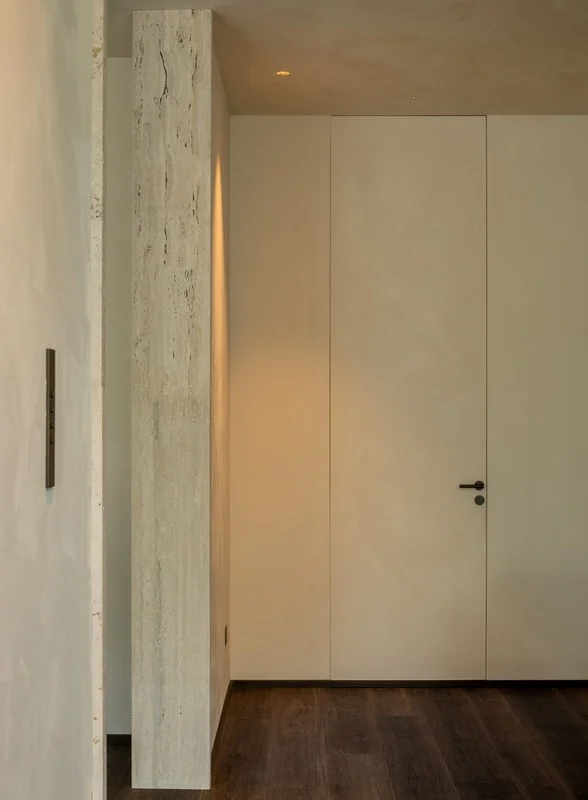
Stone: depth and character
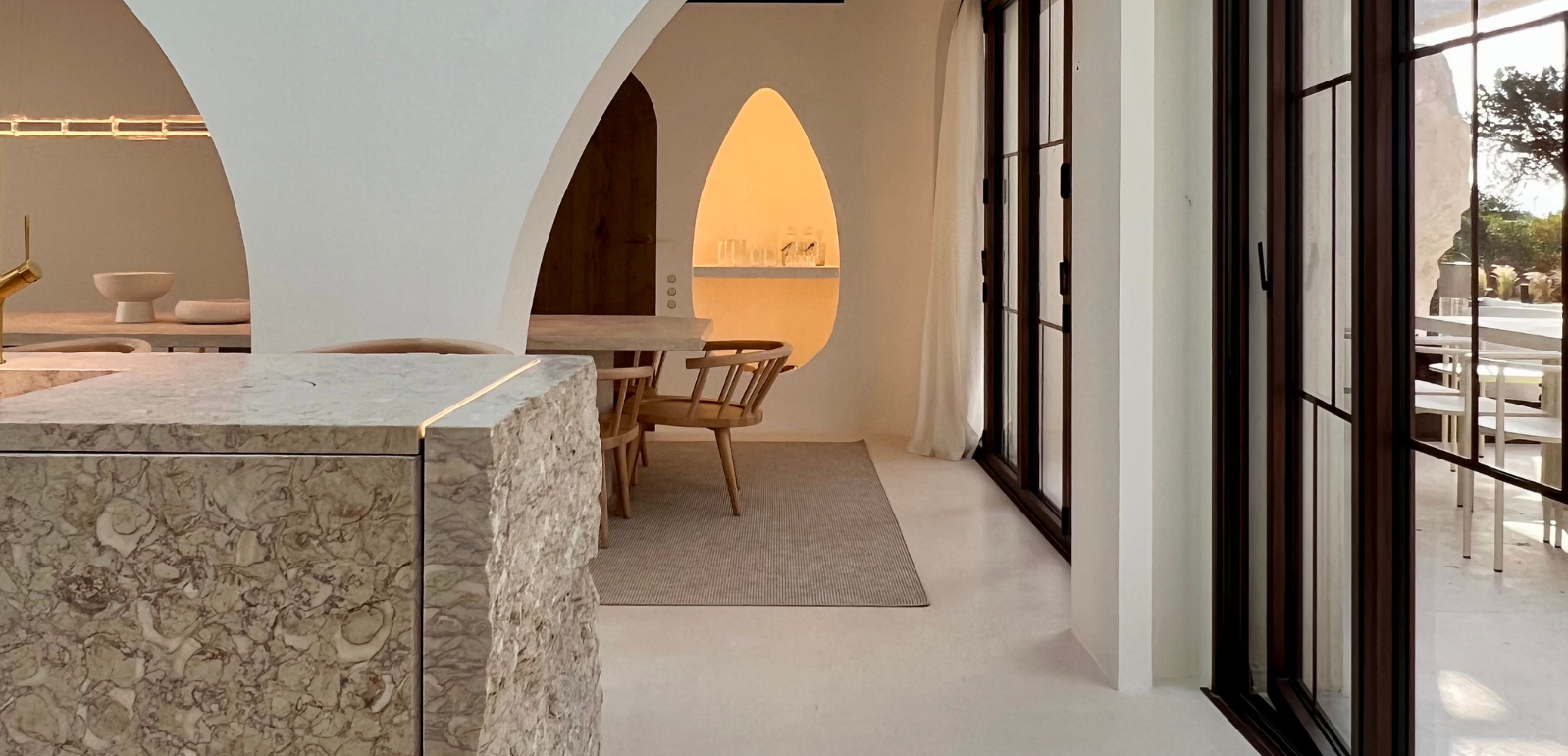
Stone is a material with strong visual richness. Its veins, irregularities and relief are an essential part of its identity.
To enhance these qualities, grazing light — that is, light directed laterally across the surface — tends to work best. This type of lighting creates subtle shadows that emphasise texture and add depth.
When light is too frontal or uniform, stone can lose much of its character, as the surface appears flatter and more homogeneous.
In architectural projects, properly lighting a stone wall can transform it into a defining feature of the space.
Wood: warmth and naturality
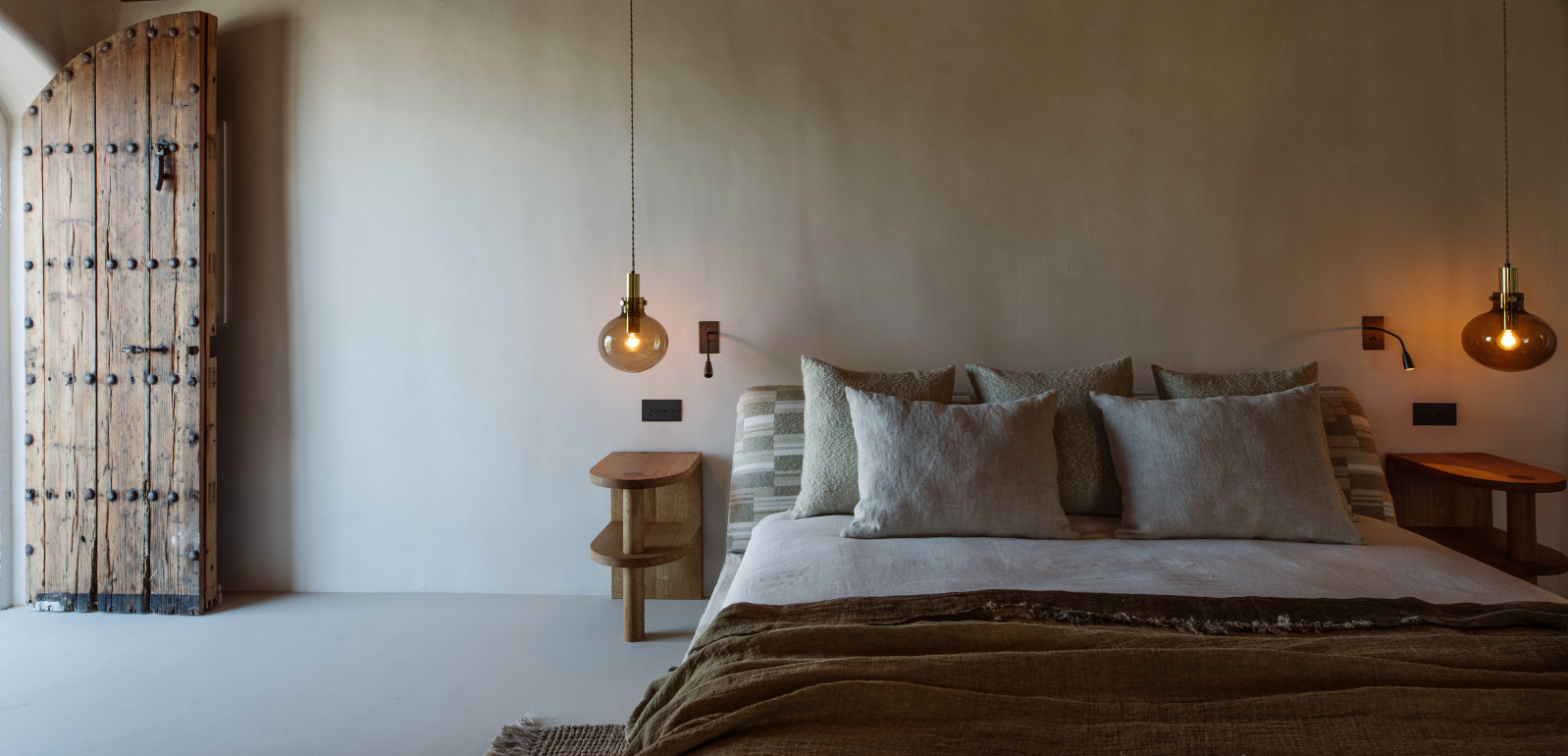
Wood is a material closely associated with warmth and visual comfort. Its perception is strongly influenced by the colour temperature of the lighting.
Warm light tends to enhance the natural tones of wood, bringing out its grain and creating a more inviting atmosphere.
In addition, indirect or diffused lighting works particularly well with this material, as it avoids excessive glare and maintains a soft, natural reading of the surface.
In residential or hospitality spaces, well-designed lighting can reinforce the organic and elegant character of wood.
Microcement: continuity and balance
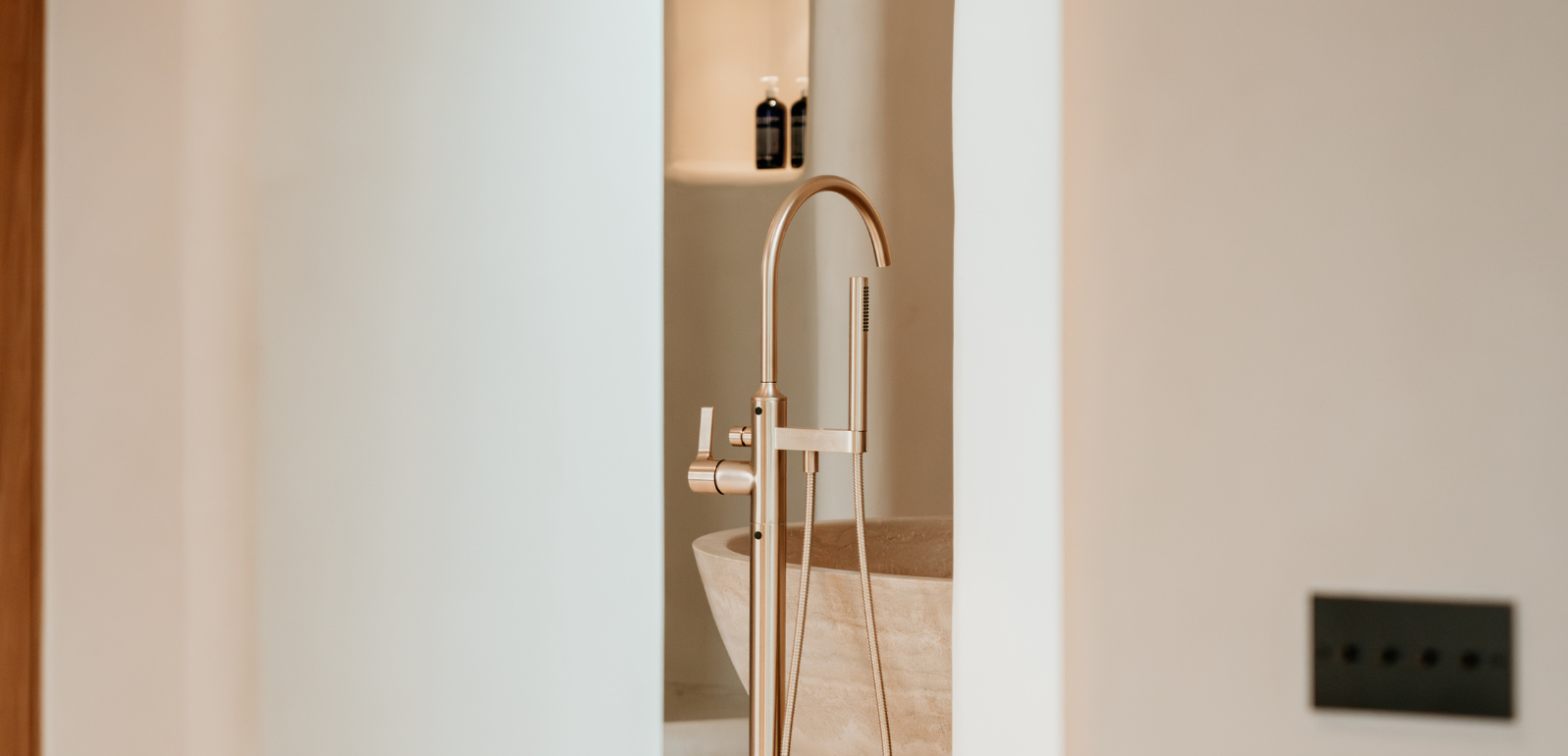
Microcement is defined by its continuous, minimalist and contemporary appearance. Unlike more textured materials, its visual interest lies in the uniformity of the surface.
In these cases, lighting should be even and balanced, avoiding excessive contrast that could reveal imperfections or create unwanted shadows.
Indirect lighting, wall washers or integrated architectural systems are often effective solutions to maintain the visual continuity of the material.
When properly executed, the result is a clean, serene and sophisticated space.
The importance of designing lighting from the outset
The relationship between light and material should not be resolved at the end of the project. Ideally, lighting design is considered from the earliest stages, in dialogue with the architecture and the selected materials.
At LuzÓptima, we understand lighting as an essential part of spatial design. That is why we work closely with architects and interior designers to define lighting solutions that complement materials, reinforce the architecture and enhance the user experience.
Because light does not only illuminate a space: it reveals everything that space is meant to express.