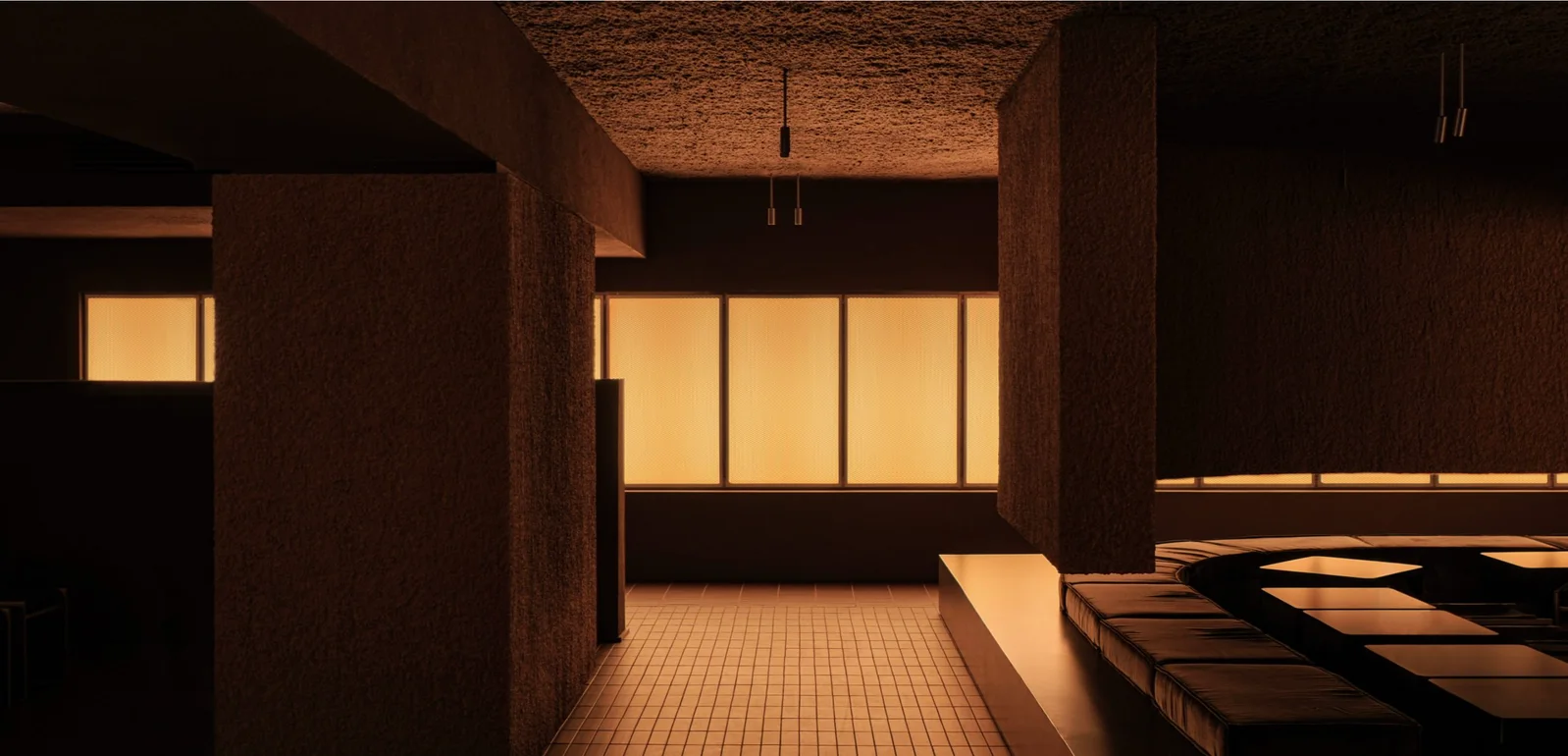
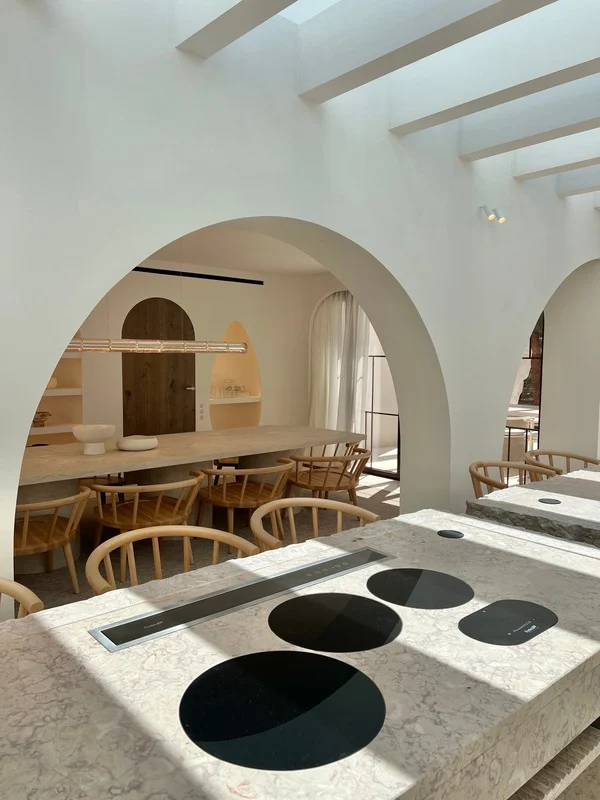
Designing the lighting of a home is not about choosing beautiful fixtures.
It is about understanding the architecture, anticipating how the space will be lived in, and using light as a tool to shape perception, comfort and atmosphere.
At LuzÓptima, we approach each residential lighting project as an integral process, where design and technical expertise evolve together from the first meeting to the final switch-on.
This is our approach.
1. Listening to the project before talking about light
Everything starts with a simple question: what is this home meant to express?
We analyse:
- Architectural plans.
- Orientation and natural light conditions.
- Materials and finishes.
- Furniture layout.
- Client profile and lifestyle.
Lighting a minimalist coastal home is not the same as lighting an urban apartment with low ceilings. Light is not imposed; it adapts.
At this stage, we define the overall lighting concept: warm, neutral, scenographic, technical, invisible or expressive.
2. Technical definition: function and precision
Once the concept is defined, we move into the technical phase. We develop:- Lighting layout.
- Types of luminaires (recessed, surface-mounted, decorative).
- Colour temperature (2700K, 3000K…).
- Colour Rendering Index (CRI).
- Beam angles and light intensity levels.
- Control and dimming systems.
3. Selection of luminaires and mechanisms
Each element is selected based on three key criteria:
- Aesthetic integration.
- Technical quality
- Overall coherence.
We work with specialised high-end architectural lighting brands such as Prado, ANDlight, Atelier Luxus and ROND, allowing us to offer tailored, minimalist and technically precise solutions.
In high-end residential projects, electrical mechanisms and luminaires must integrate into walls and ceilings without interfering with the aesthetic of the space.
Technology should be present, but not visible.
4. Scene design and user experience
Lighting is not static.
We design lighting scenes for different moments of the day:
- Functional general lighting.
- Warm ambient lighting.
- Accents on art or architectural features.
- Soft night lighting.
- Scenes for gatherings or dining.
A home should be able to shift its atmosphere with a simple gesture.
At this stage, we also develop dimming strategies and, where required, integrate lighting with home automation systems.
5. On-site coordination and support
During the execution phase, we monitor the project to ensure that:
- Installation dimensions are accurate
- Luminaires are perfectly aligned
- Finishes are properly integrated
- Light temperature and direction match the intended design
In many cases, we make adjustments on site, as the project is not complete until the lighting is experienced in the real space.
Our work does not end with supply. We support the project through to its final outcome.
6. Final adjustment: when light comes to life
The key moment is the switch-on.
This is when we assess:
- Uniformity
- Visual comfort
- Balance between natural and artificial light
- Enhancement of materials and volumes
A well-designed residential lighting project does not glare.
It does not overwhelm.
It does not saturate.
It works quietly.
At LuzÓptima, we combine technical precision, contemporary design, close guidance and a personalised approach at every stage.
We do not see lighting as a product, but as an essential part of architecture.
Because a home can be well designed… but it is light that ultimately defines how it is lived.